
On October 20, 2025, Nigerians across the country will take to the streets for the #ReleaseNnamdiKanuNow protest — a national call demanding the freedom of Mazi Nnamdi Kanu, leader of the Indigenous People of Biafra (IPOB).
But beneath the hashtags, the real issue isn’t just one man’s freedom — it’s about whether the Nigerian government still respects its own laws.
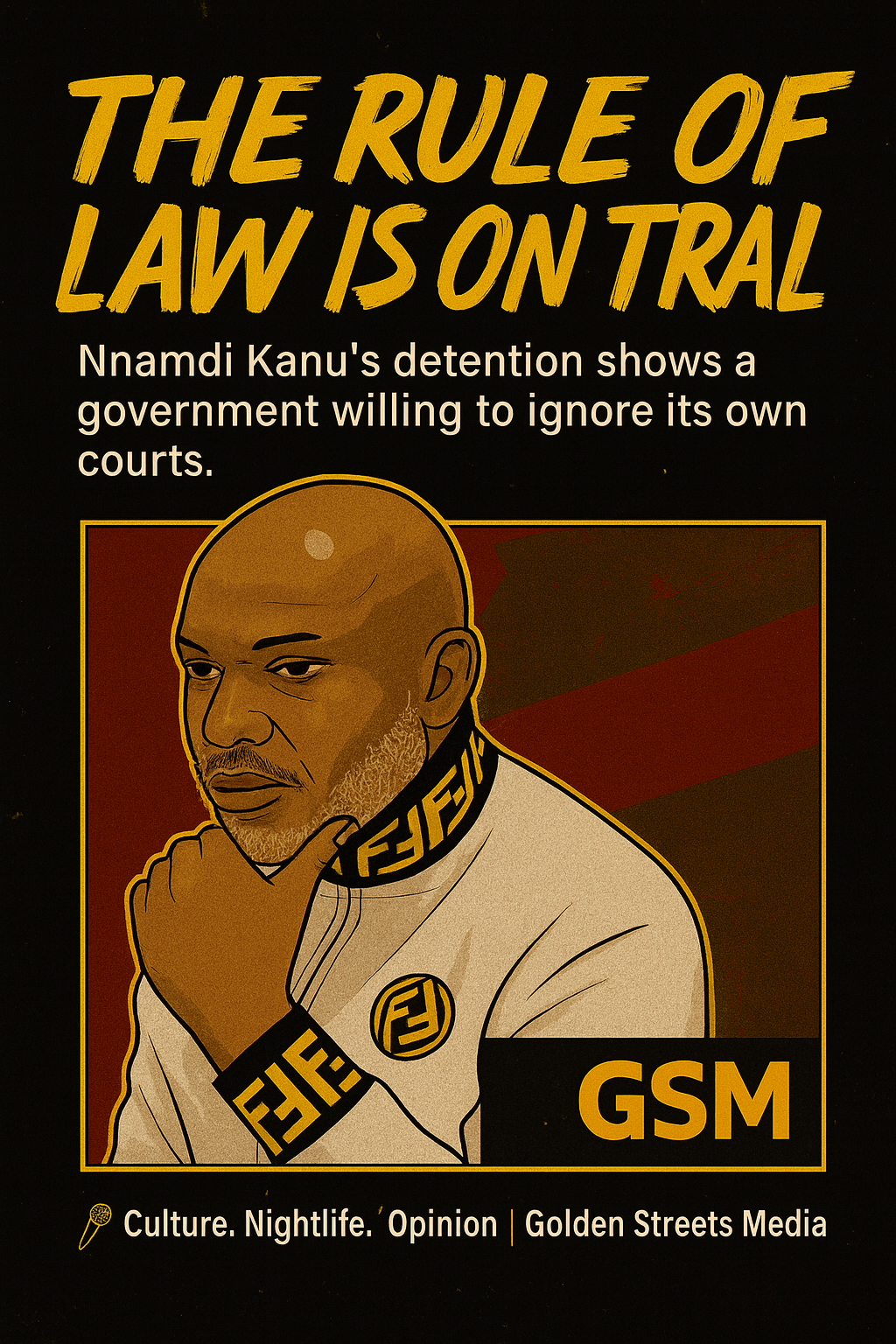
Kanu’s continued detention, despite a clear Court of Appeal acquittal, has become more than a legal matter. It’s a test of Nigeria’s democracy, its Constitution, and its moral integrity.
When a nation starts ignoring its own courts, it doesn’t just imprison one man — it chains the rule of law itself.
In October 2022, the Court of Appeal ruled decisively: Nnamdi Kanu was discharged and acquitted of all charges related to terrorism and separatism. The court condemned his extraordinary rendition from Kenya as illegal and unconstitutional.
That judgment should have been the end of the case. But three years later, Kanu remains in custody under the Department of State Services (DSS), in clear defiance of the law.
According to Barrister Njoku Jude Njoku, a member of Kanu’s defense team, this is more than contempt — it’s an outright violation of Nigeria’s Constitution.
“Mazi Nnamdi Kanu’s detention isn’t just illegal — it’s a national disgrace. The government is disobeying its own courts and mocking the Constitution,” Njoku said.
The Supreme Court later reversed the acquittal, a move that lawyers argue shattered the Doctrine of Finality — the principle that once a case has been decided by the highest competent court, it cannot be reopened.
Worse still, Kanu’s ongoing trial is reportedly being pursued under the Terrorism Act of 2013, a law that was repealed years ago.
Dead law. Dead case. Yet a living man remains behind bars.
The continued detention of Nnamdi Kanu isn’t just a legal technicality — it’s a mirror reflecting a deeper national problem: the erosion of justice.
When the government ignores its own courts, it signals that laws are optional — a dangerous message in any democracy. The moment the executive can overrule the judiciary, the separation of powers collapses.
If one man’s acquittal can be reversed, what stops the government from doing the same to journalists, activists, or opposition voices tomorrow? Injustice tolerated is injustice invited.
Section 36(9) of Nigeria’s Constitution is clear: no one shall be tried twice for the same offence. Holding Kanu after a legal acquittal is a direct assault on that principle — and by extension, on every Nigerian citizen’s right to fair trial.
The Biafra question has always been sensitive. But each time the state chooses repression over resolution, it widens the gap between government and governed. Kanu’s detention doesn’t silence discontent — it amplifies it.
Led by activist Omoyele Sowore and other civil society groups, protesters plan to occupy the Presidential Villa on October 20 to demand the IPOB leader’s release.
Despite warnings from the Nigeria Police Force, organizers insist the protest will go ahead peacefully. Their message is simple: Obey the law.
According to Njoku, this isn’t just about one man — it’s about defending the very foundation of justice.
“This fight is bigger than one man. It’s about every Nigerian’s right to justice, dignity, and freedom. When the state tramples one man’s rights, it endangers us all.”
The government can silence individuals, but it cannot silence a truth this clear: the law has spoken — and justice delayed is justice denied.
The Nnamdi Kanu case has become a defining moment for Nigeria’s democratic maturity. It’s a stress test for how much the system can bend before it breaks.
When a nation ignores a final court ruling, it teaches citizens that courts are meaningless and that justice belongs only to those in power.
This isn’t just a human rights issue — it’s an economic and social one too. Investors, global partners, and Nigerians in the diaspora are watching closely. Political instability and legal inconsistency erode confidence in the nation’s future.
If the rule of law no longer rules, what will?
This is no longer about IPOB or separatism. It’s about every Nigerian who has ever hoped that the system would protect them.
Because if acquittals can be ignored, no one is safe — not the journalist exposing corruption, not the activist calling for reform, not the citizen fighting for basic rights.
Today it’s Kanu. Tomorrow, it could be anyone.
Nnamdi Kanu’s continued detention, despite a Court of Appeal acquittal, is a stain on Nigeria’s democracy. It violates the Constitution, disrespects the judiciary, and sends a dangerous message: that the rule of law ends where politics begins.
The government has a choice — enforce the court’s decision and restore faith in the system, or keep disobeying its own laws and risk tearing that system apart.
Because at the heart of this case is a simple truth: a government that ignores its courts cannot claim to uphold justice.