For over two decades, Nigeria has endured a slow-burning war. From the Southern Kaduna killings to the massacres in Jos and Borno, communities have been wiped out by insurgent groups like Boko Haram and their affiliates. Thousands have died, families displaced, and entire regions left in ruins.
Yet after all this time, one question remains unanswered: why has the Nigerian government failed to stop it?
The Hidden War Within Nigeria
The violence in Nigeria’s north didn’t begin yesterday. It has evolved through years of government negligence, political hypocrisy, and deep-seated corruption. Boko Haram, once dismissed as a fringe movement, has transformed into a terror machine that controls villages, collects taxes, and spreads fear across borders.
But this isn’t just an ideological war.
It’s a war funded and fueled by people who benefit from chaos.
Multiple reports and investigations have exposed the uncomfortable truth — certain individuals within the system have supplied arms, money, and intelligence to insurgents. This isn’t mere rumor; it’s a documented pattern that points to the rot within Nigeria’s political and military establishment.
The victims are not politicians or generals.
They are market women in Borno, farmers in Benue, schoolchildren in Chibok and Dapchi, and families in Southern Kaduna — targeted, displaced, and forgotten.
What’s happening is not random violence.
It’s a genocide unfolding in slow motion.
The Religious and Regional Divide
In the past decade, the killings in Southern Kaduna, Jos, and other Christian-dominated areas have raised alarms of religiously motivated attacks. While the government insists it’s handling “banditry” and “terrorism,” the reality on the ground tells a different story: entire communities have been erased because of their faith and ethnicity.
The silence of those in power is not neutrality — it’s complicity.
When armed groups strike repeatedly, and the government fails to protect its citizens, it sends a message: some lives matter less.
A Leadership That Has Failed Its People
Former President Goodluck Jonathan once said that terrorists in Nigeria have been “treated with kid gloves.”
He was right.
Instead of facing decisive military action, many insurgents have been “rehabilitated,” “reintegrated,” and even compensated — while victims are left to bury their dead and rebuild what’s left of their homes.
Former Finance Minister Ngozi Okonjo-Iweala put it even more plainly:
“It is not America that hit us — it is the leadership of Nigeria that has failed to protect its citizens.”
That failure continues today.
Decades later, the same terror persists.
Why Nigeria Needs an Unbiased Peacekeeping Partnership
Nigeria’s sovereignty is sacred. But sovereignty means nothing when a nation cannot protect its own people.
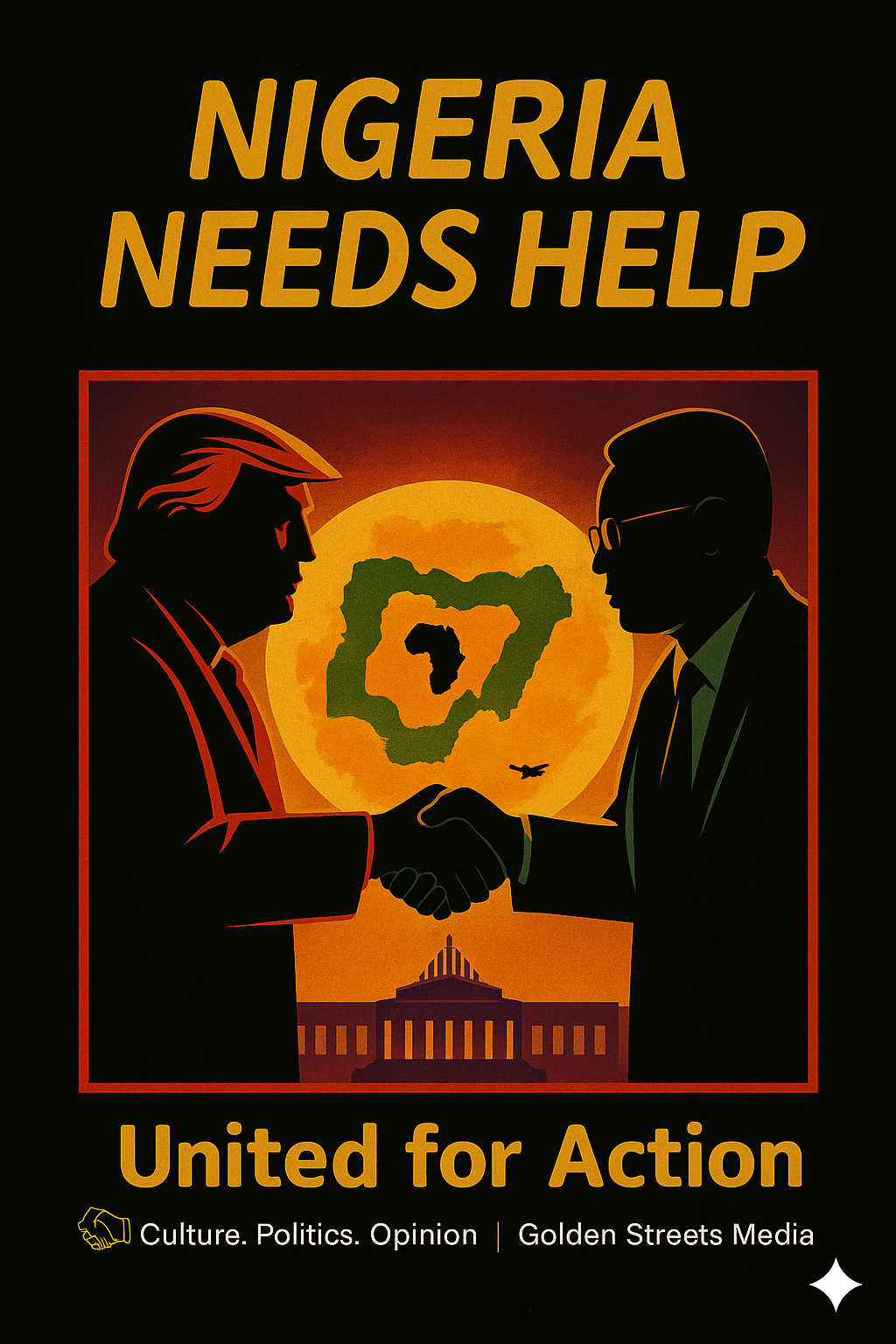
At this stage, Nigeria needs an international peacekeeping partnership — not an invasion, but a collaboration rooted in fairness, intelligence, and human rights.
A U.S.–Nigeria security partnership, under neutral oversight, could provide:
✅ Modern intelligence and surveillance capabilities
✅ Tactical precision to dismantle insurgent networks
✅ Independent accountability mechanisms to prevent bias or abuse
✅ Strategic reforms to rebuild public trust in national security
The goal isn’t occupation — it’s restoration.
To save lives. To restore dignity. To remind the world that Nigerian blood is not cheap.
The Moral Obligation to Act
For too long, the world has looked away as Nigeria bleeds. The killings have become background noise — headlines that fade, hashtags that die out, and promises that never translate into justice.
But this cannot continue.
There is a moral and humanitarian duty — both for Nigeria’s leaders and for global allies — to act decisively.
Because every day of inaction costs lives.
The Nigerian government must open its doors to unbiased military cooperation. The United States, the African Union, and other international partners must see Nigeria not as a failed state, but as a country worth saving from internal decay.
This is not about politics — it’s about people.
Final Word
Nigeria stands at a crossroads. The path of pride and denial leads only to more graves. The path of partnership, reform, and courage could lead to peace.
If the Nigerian government cannot or will not end this cycle of terror, then it’s time to let those who can help, help.
The people of Nigeria deserve safety.
They deserve justice.
They deserve peace.
And that begins by admitting the truth:
Nigeria cannot defeat terror alone.